How a Michigan School District Runs a Peer-Led Impaired Driving Program with Fatal Vision® Goggles
|
At a Glance
- How a Michigan school district’s peer-led program trains high school students to educate their classmates on impaired driving risks
- How the STATS program built a network of community partners through a Fatal Vision® lending-library model
- How law enforcement, DEA agents, and families experience hands-on Fatal Vision® activities together
- How age-specific messaging keeps the program relevant from elementary school through high school
|
Reading time: 5 minutes
The Straight Talk About Tough Stuff (STATS) program in Michigan uses Fatal Vision® products to train student peer educators and community partners about the risks of impaired and distracted driving. Through strong partnerships, hands-on education, and a lending-library model, the program helps students, educators, and community members better understand the risks of impaired driving.
It takes more than simply owning Fatal Vision products by Innocorp to educate target audiences about the risk of impaired and distracted driving. Jennifer LaChapelle, Straight Talk About Tough Stuff (STATS) Project Coordinator for the Reeths-Puffer School System near Muskegon, Michigan, has made it her mission to train as many community members as possible to successfully reach students in the district with her safety message.
“It’s the mission of STATS to train high school student leaders to be peer educators,” LaChapelle said. “[They] present the dangers of substance use, digital citizenship, friendship boundaries to help the youth in our community have a safer, healthier childhood.”
Building a Strong Prevention Program
 LaChapelle assumed the role of STATS project coordinator in 2018. At that time, the program’s representatives traveled to seven different school districts through funding from the local hospital and community donors. In 2020, STATS, with the Reeths-Puffer district acting as the fiduciary agency, became a drug-free grantee. This allowed the program to greatly expand. It purchased more Fatal Vision products. It gave LaChapelle the chance to attend a CADCA (Community Anti-Drug Coalition of America) conference in 2022, where she met Innocorp representative Jamie Stebbeds and began a discussion about best practices for using Fatal Vision products. The program lost its hospital funding in 2025, when the Reeths-Puffer district took over the STATS program completely. STATS then operated exclusively within the district.
From the beginning, the program has involved many community groups concerned with safe student driving. “We’ve built community partnerships,” LaChapelle explained. The program works with six different law enforcement departments in the county, a community college, and eight different school districts. LaChapelle sits on multiple coalition committees within the county, too.
A Lending Library for Prevention Partners
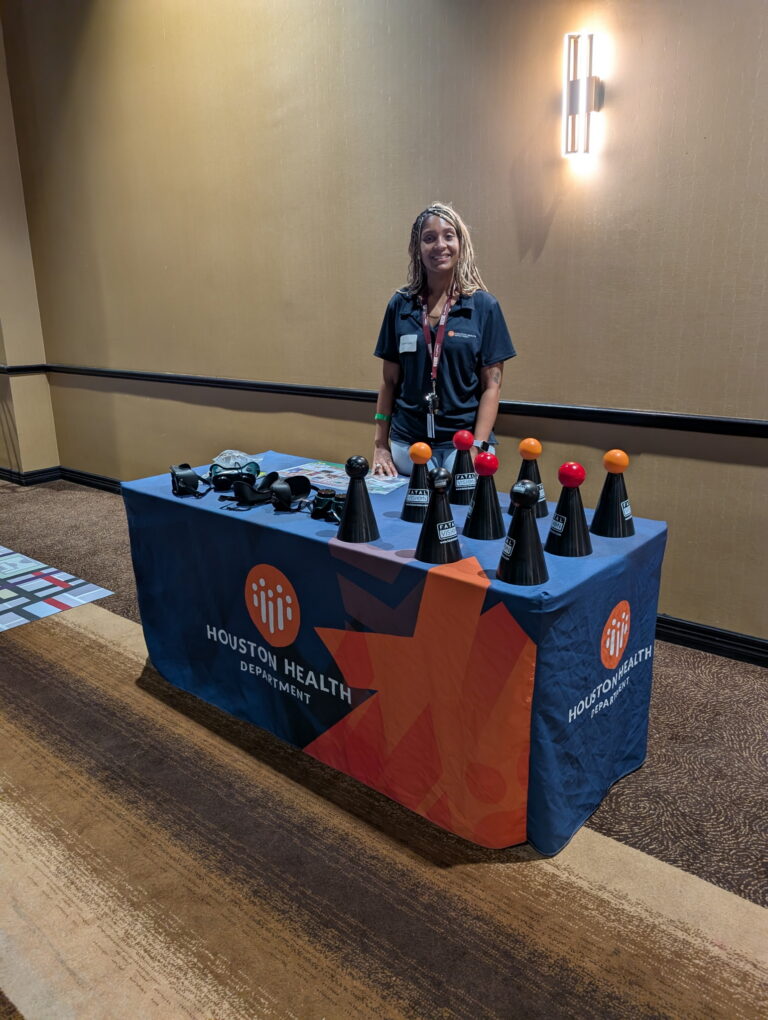
How does the program work with community partners? “We train our partners to use our Fatal Vision products,” she explained. After training, partners can borrow products to use with clients and in community outreach. “We’re like a lending library.” Some of the partners she works with have gone on to purchase their own Fatal Vision products.
Students Teaching Students
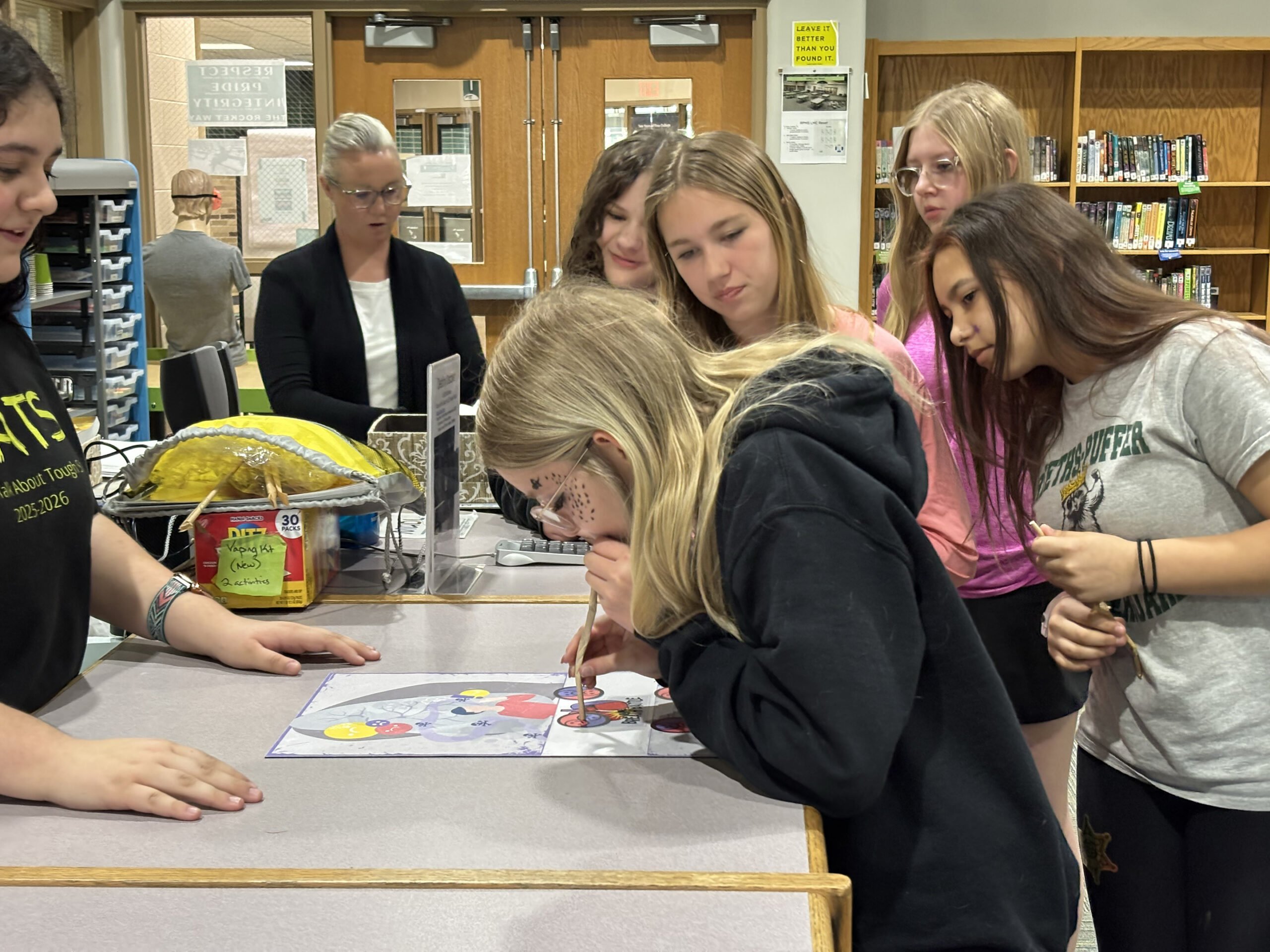
The value of partnership extends beyond simply lending out the Fatal Vision products, though. LaChapelle revealed that partnering actually begins with her students. High school students are recruited to serve in “travel teams.” She trains them in the use of Fatal Vision products. Once trained themselves, small student travel groups visit district schools and take students through Fatal Vision product activities.
Expanding the Program’s Results
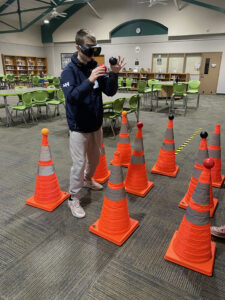
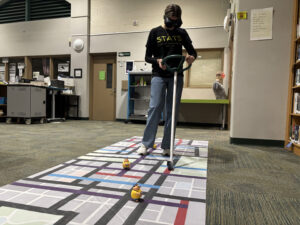 This past school year, LaChapelle had 57 students assigned to travel groups; she has signed-up eighty for the upcoming year. The Fatal Vision Alcohol Goggles, Fatal Vision THC Goggles, and the Fatal Vision Polydrug Goggles were used in twenty classroom presentations this past year and three community events within the school district. Although the program now focuses on the Reeths-Puffer district, eight other districts also benefited from Fatal Vision demonstrations last year.
Students Leading Beyond the Classroom
Recently, she brought three of her trained students with her to an area DEA office. These students ran DEA agents through the Fatal Vision activities to show them how effective they are in starting meaningful conversations with students. After the training, LaChapelle’s students went on a tour of the DEA office, so both groups benefited.
Why Fatal Vision Makes an Impact
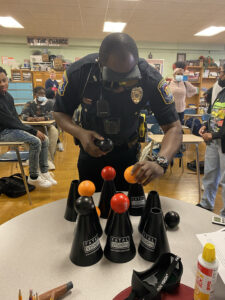 LaChapelle explained that schools, administrators, and prevention professionals want evidence-based products. “We follow the ‘best practice’ method with our use of Fatal Vision products,” she said. “They are a tool that, when paired with the right conversation and statistics, can make an impact on youth.” Officers can see clearly during their Fatal Vision product training that the program gets students to think about the consequences of their actions. “Kids’ brains are not developed enough to truly understand the long-term consequences of substance use or driving while impaired,” LaChapelle pointed out.
But, of course, students, and by extension their families, are the true focus of the program’s outreach. At a recent event, a father and his son each tried out the Fatal Vision karts, and both were astonished at how their driving was impacted. As the pair walked away from the karts, LaChapelle heard the teen asking his father about drunk driving and his dad’s experience with intoxication. The activity sparked a conversation between the father and son about impaired driving that may not have happened otherwise.
Reaching Students at Every Age
Student travel team presentations at schools are divided into three groups with three different focuses appropriate for the developmental ages of the audience. Elementary school students hear a message about safety and kindness. Middle and high school students hear about peer pressure. Many high school p
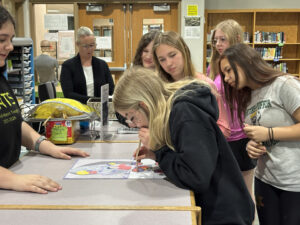
resentations are made in health classes, where the message of how alcohol and THC affect the body is integrated into the curriculum with the help of STATS. Intermediate and middle-school students in the district hear this message in science class each month. LaChapelle would love to integrate the program into high school science classes, too.
Since taking over the program, LaChapelle has expanded its repertoire of resources to include Fatal Vision Impairment Simulation Goggle Kits and activities to demonstrate impairment from alcohol, THC, and polydrug, as well as materials to educate about the risks associated with vaping and driving distracted. Why has she invested in the products?
Because they are very effective in getting the message out. “Conversations get started and help kids connect the dots with health lessons and conversations that follow,” she said. “Thirty kids can go through six activities within forty minutes, and I can get tips on their use from Innocorp.”