How the Detroit Police Explorers Program has trained youth ages 10 to 18 for law enforcement careers since 1972
How Explorers staff community event booths using Fatal Vision® Alcohol and THC Goggles and the DIES® activity mat
How peer delivered activities draw crowds and spark honest conversations about alcohol, THC, and traffic safety
How memorable hands-on products make prevention education stick with students
Detroit PD’s Explorers Program Drives Home Truths with Innocorp
Since 1972, the Detroit Police Department has offered a program for youth interested in future service to their community through law enforcement. The Explorers Program recruits students ages 10 to 18 to train in skills that would apply directly to the field.
The skills encompass physical training, interpersonal skills, first aid, critical incident response (including information on domestic violence, drug abuse/Narcan, smoking/vaping), team building, leadership, and safety issues such as guns, crowd control, and felony stops. Students who join leave prepared to use their knowledge in a law-enforcement career.
The Explorers Program is currently co-directed by Officer Dan Robinson, Sr., a thirty-year veteran of the Detroit PD. He’s dedicated his own career to community policing and youth mentoring, making him a perfect fit for Explorers.
Robinson says that the program offers participants a variety of experiences, including an annual summer Explorers Camp Academy that allows them to experience a weeklong leadership and team-building event. Explorers also hosts a Teen Wellness Summit that provides information, acceptance, and support for students. Participants also get involved in community events such as the city’s St. Patrick’s Day Parade, in which Explorers march in uniform. The program aims to accept students where they’re at and provide them with guidance and discipline to get where they want to go in the law enforcement field.
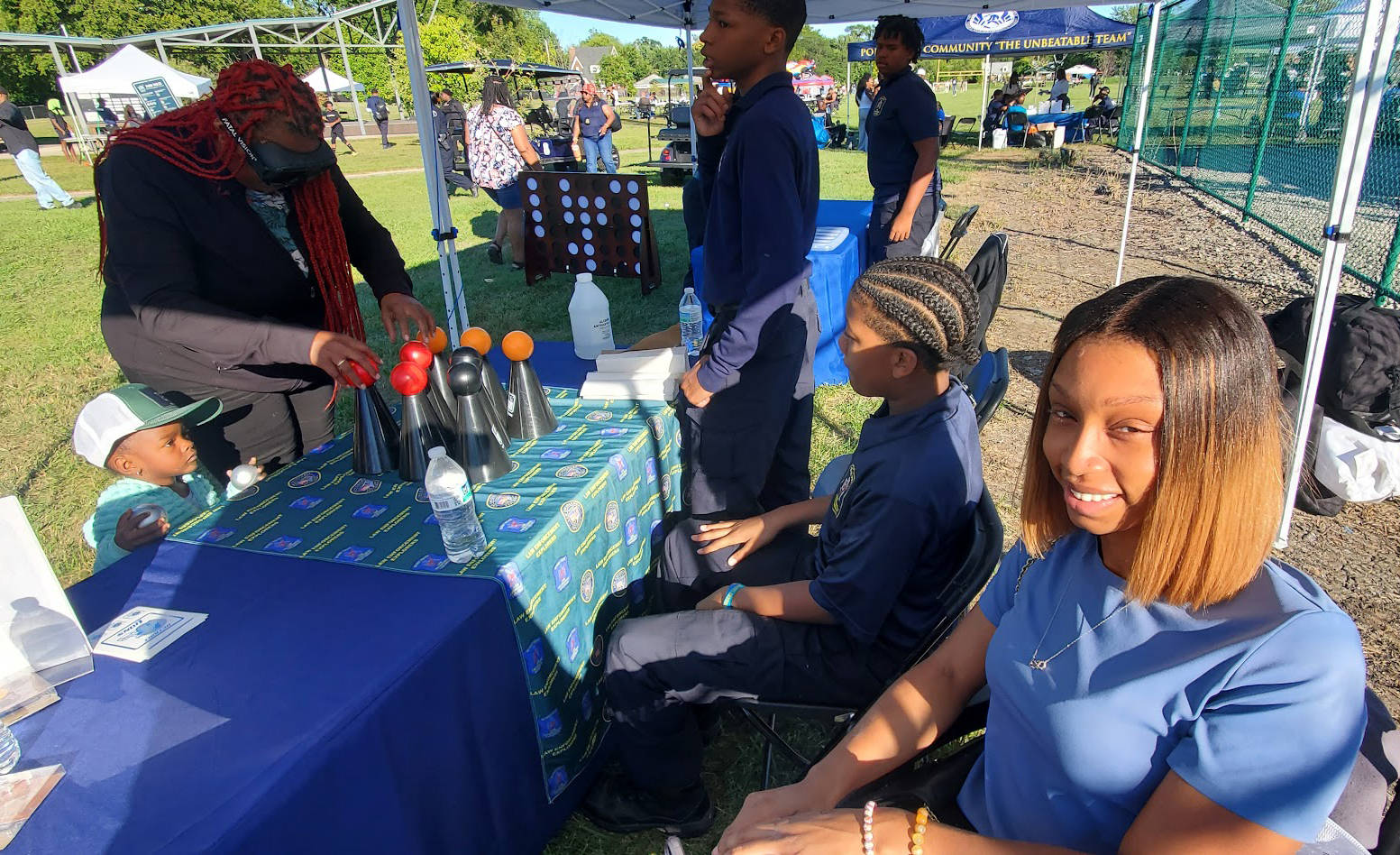
Several times during the year, community events offer Explorers a chance to practice what they learn directly with the community, and that’s where Innocorp’s Fatal Vision® resources enter the training picture. Robinson said that the program sets up individual booths at community events (as well as its own events, such as the Teen Wellness Summit), each one using the Fatal Vision® Alcohol and THC Goggles and the DIES® sidewalk activity mat to attract people and drive home vital truths about alcohol and THC use and promote traffic safety.
“The Explorers deliver the activities and present the information to the community,” Robinson explained. “They’re overseen by a police officer.” Why promote safety issues via Explorers? “Having kids staff the booths is more of a draw and promotes conversation.”
Robinson believes that Fatal Vision® tools are a definite attraction for students who attend these events. “The products make education memorable and engaging,” he said.
He explained that youths attending the community events often start off very self-assured and even cocky about succeeding at the Fatal Vision® stations. “The activities shake that confidence when the participants begin to see how impairment quickly degrades their performance.”
One participant at a recent event was quite over-confident about their ability to function while wearing the THC Goggles. But once they put the goggles on and tried the ball toss, their attitude quickly changed.
“They realized their limitations when impaired,” Robinson revealed.
All of the products from Innocorp have proven valuable at these events. They attract attendees to the booths and get them involved. They open the door for conversations about serious topics in a memorable and reassuring way and give Explorers a chance to practice their newly gained community outreach and education skills. And while all of the products have proven popular with attendees, Robinson has currently seen a focused interest in the DIES® Sidewalk Activity Mat.
“The Sidewalk Mat is new to them,” he said. “It’s a big draw.” At a recent event, he said that the stations drew a couple hundred interested participants.
Robinson added that the Fatal Vision® activities have also proven to be a great recruitment tool for the Explorers Program. Potential Explorers become aware of the program through events like these and are relaxed enough to ask questions of the current Explorers operating the booths. When parents attend, it’s a chance to educate them about this opportunity for their youth, as well as issues surrounding traffic safety and substance abuse.
Innocorp isn’t the Explorers Program’s only partner. The Boy Scouts of America and the Detroit Public Safety Foundation have joined to support a shared mission: training youth to be effective and safety-conscious law-enforcement officers for Detroit.
***
To find out more about the Detroit Police Department’s Explorers Program, visit its web site: www.dpdexplorers.org.
Innocorp is the pioneering developer of Fatal Vision® Goggles and other hands-on impairment-awareness tools used globally by law enforcement, educators, and safety professionals.
Have a Question?
We’d love to online chat! We are available Monday-Friday from 8am-5pm (CST):
“We use Fatal Vision products to teach youth and teens about the harms of substance use. The kids really enjoy using them and learn from them, too—it’s a win-win! All of the items are easy to use and integrate into our lessons, making our job easier.”
Jessica Colley The PULSE Coalition Coordinator of Chenango County
How a Michigan School District Runs a Peer-Led Impaired Driving Program with Fatal Vision® Goggles At a Glance How a Michigan school district’s peer-led program trains high school students to
At a Glance How a Houston Health Department community liaison reaches at-risk youth in underserved communities and last chance classrooms How the Fatal Vision® THC and Opioid Kits turn difficult
At a Glance How a safety driving simulator strengthens prevention programming for young drivers How educators use SIDNE to demonstrate impaired and distracted driving in a controlled setting How the