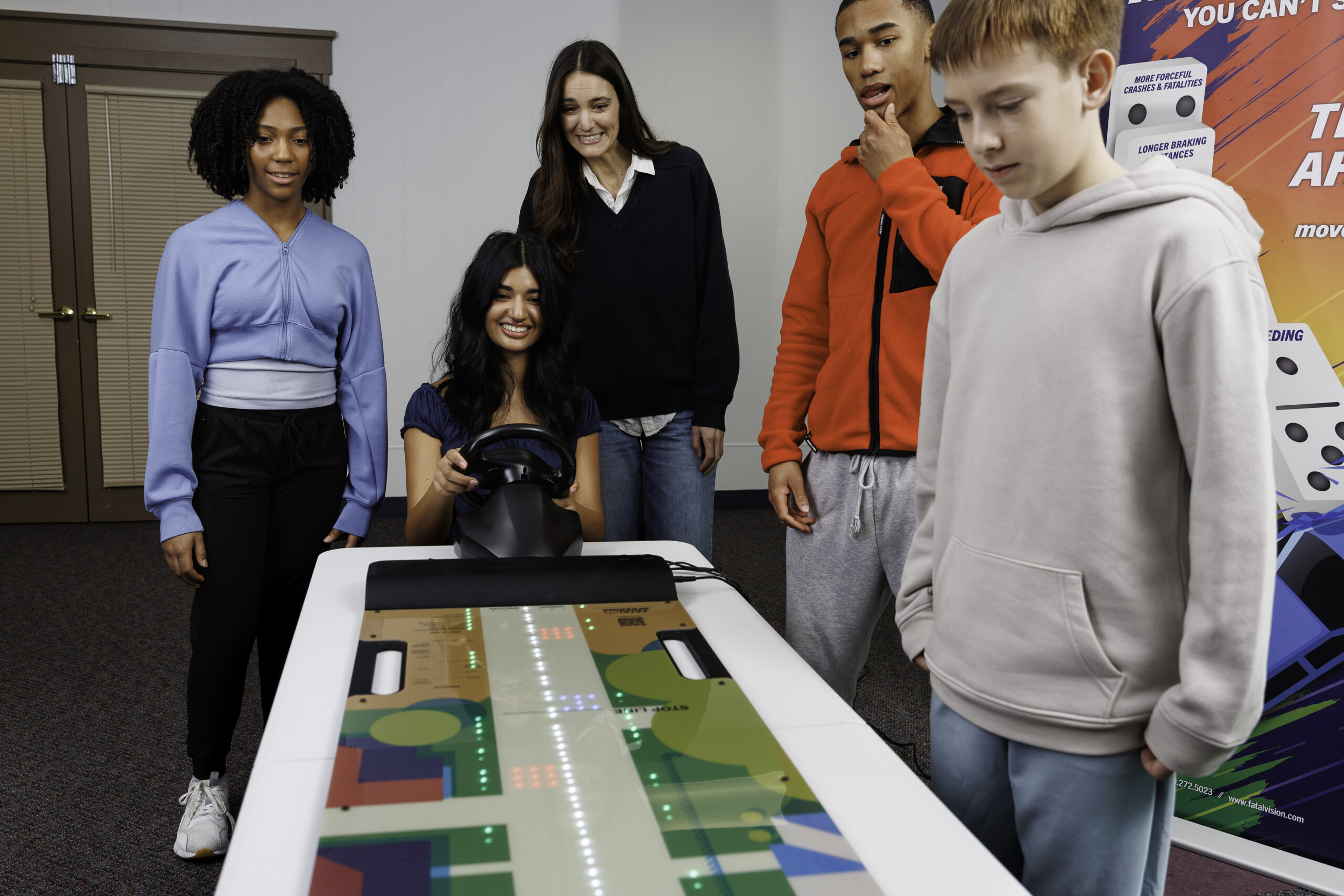
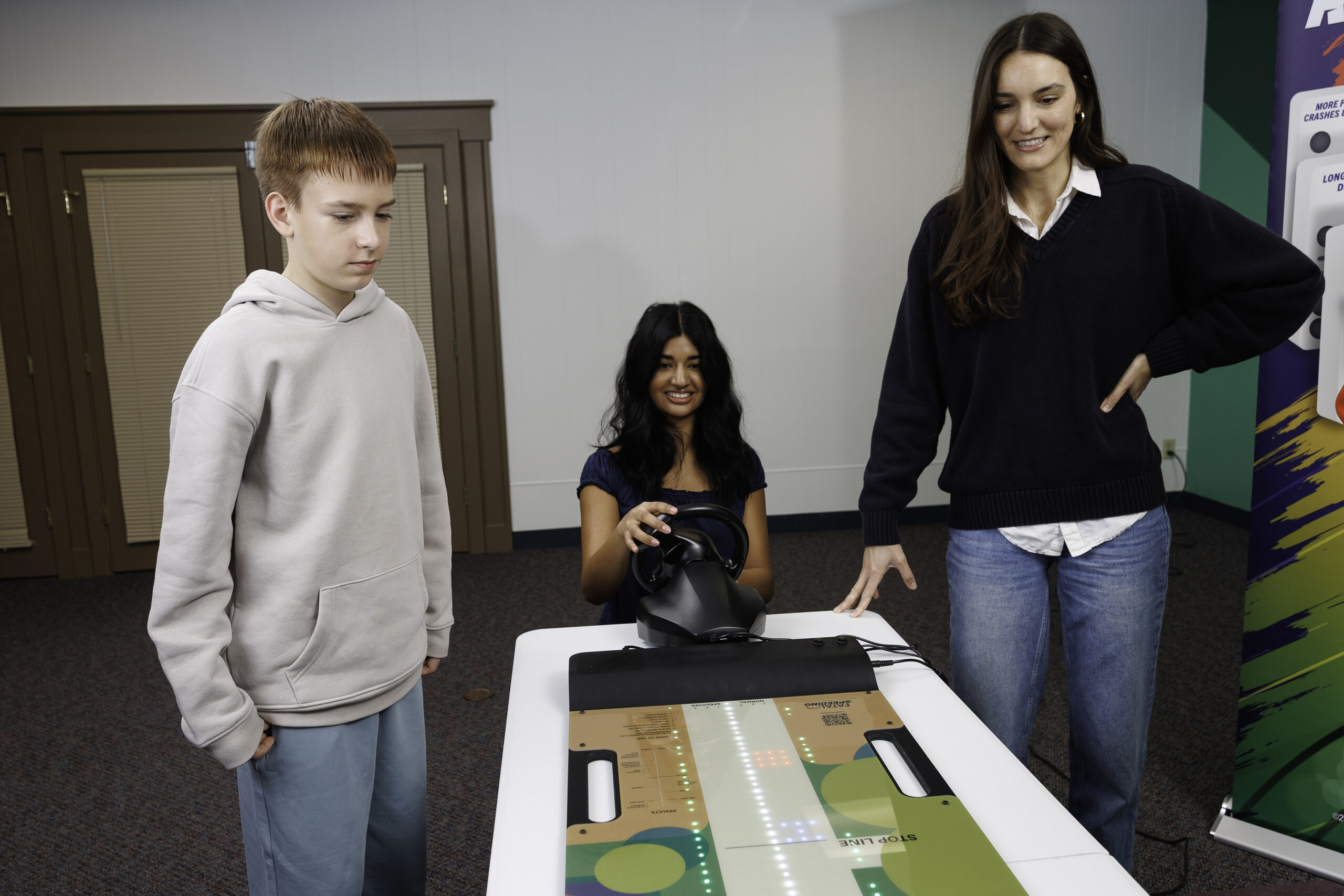
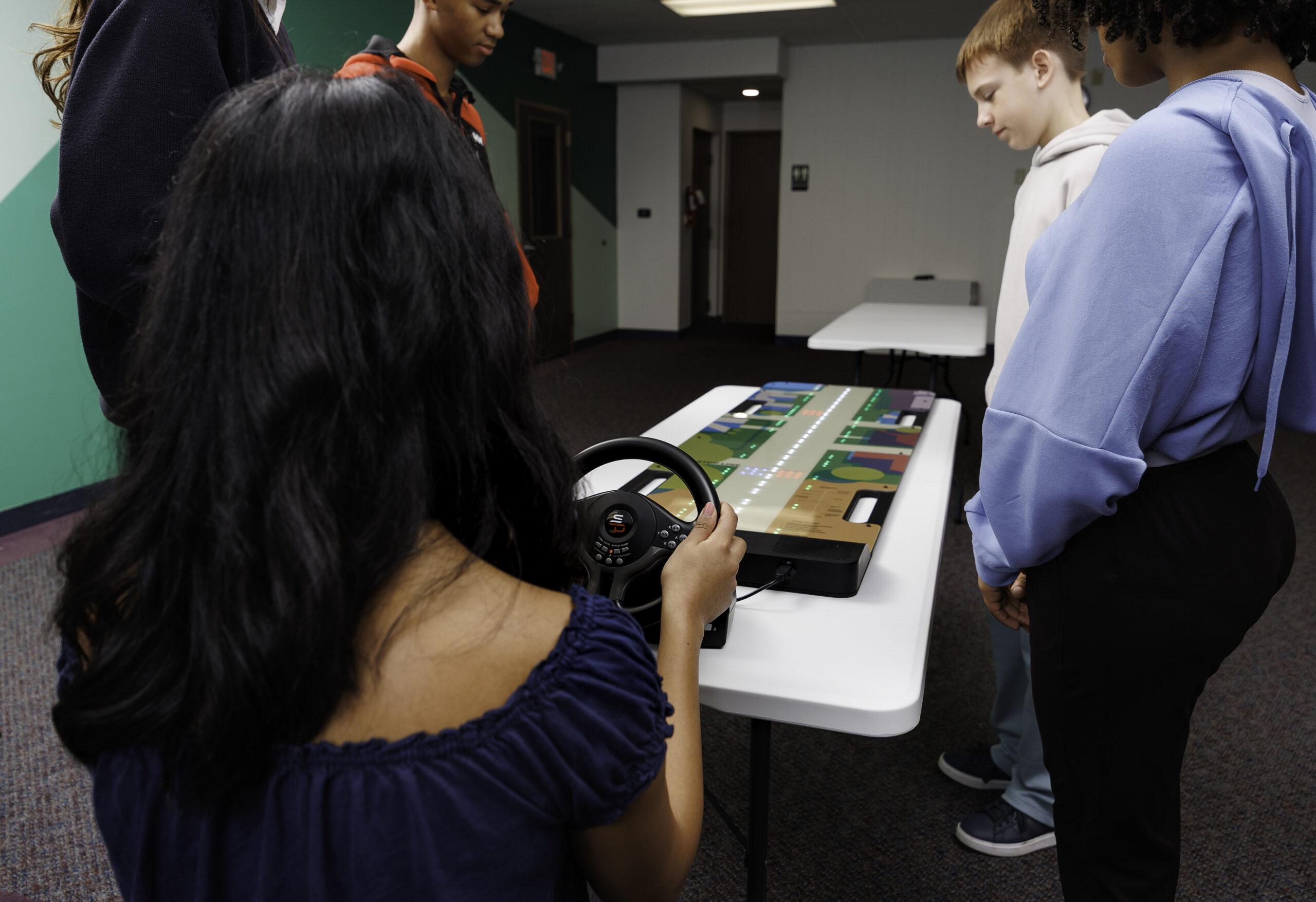
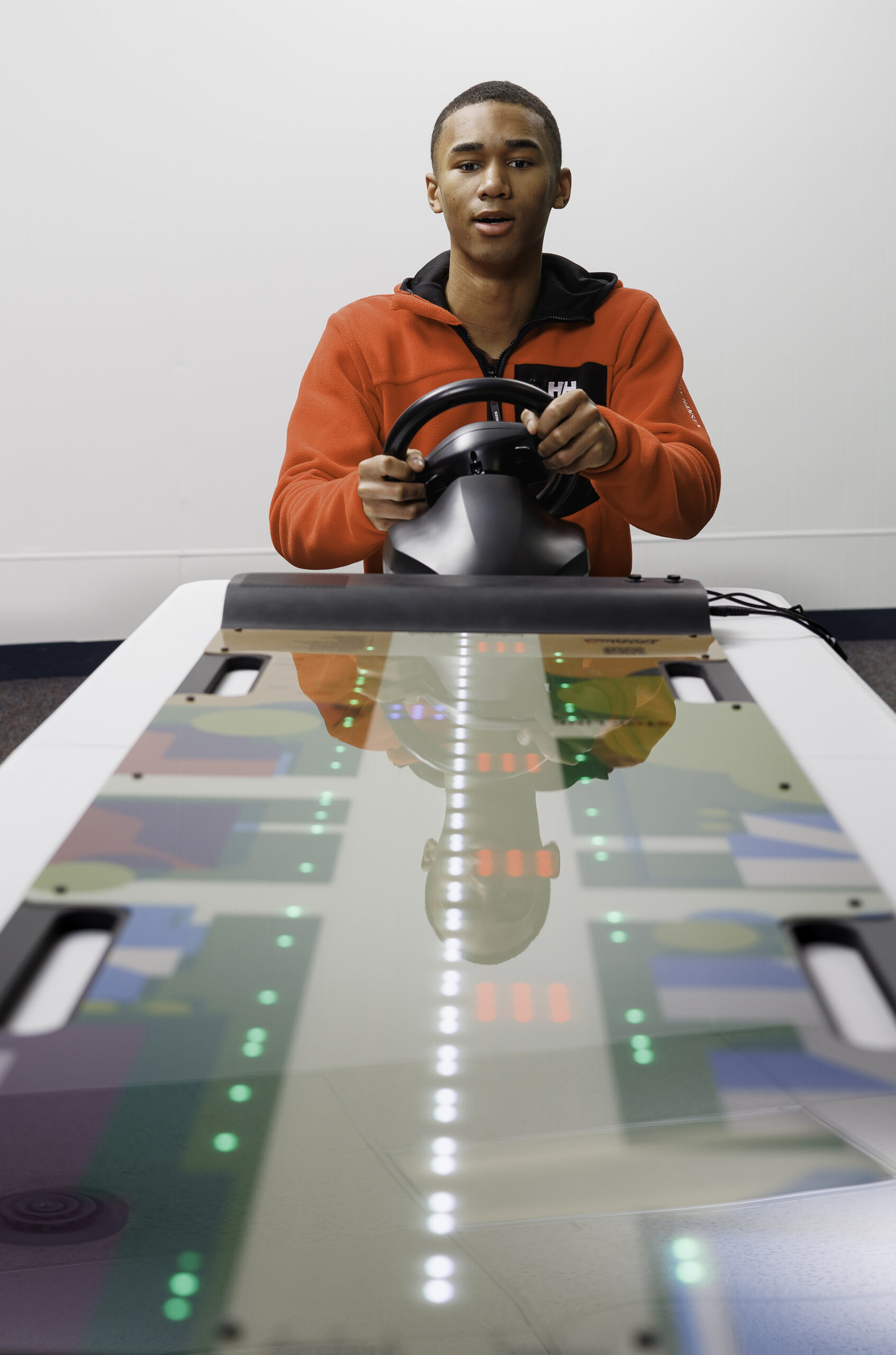

Fatal Speeding® is an engaging, hands-on activity that shows how higher speeds leave less time to react, increase stopping distance, and make hazards harder to avoid.
$5,290.00
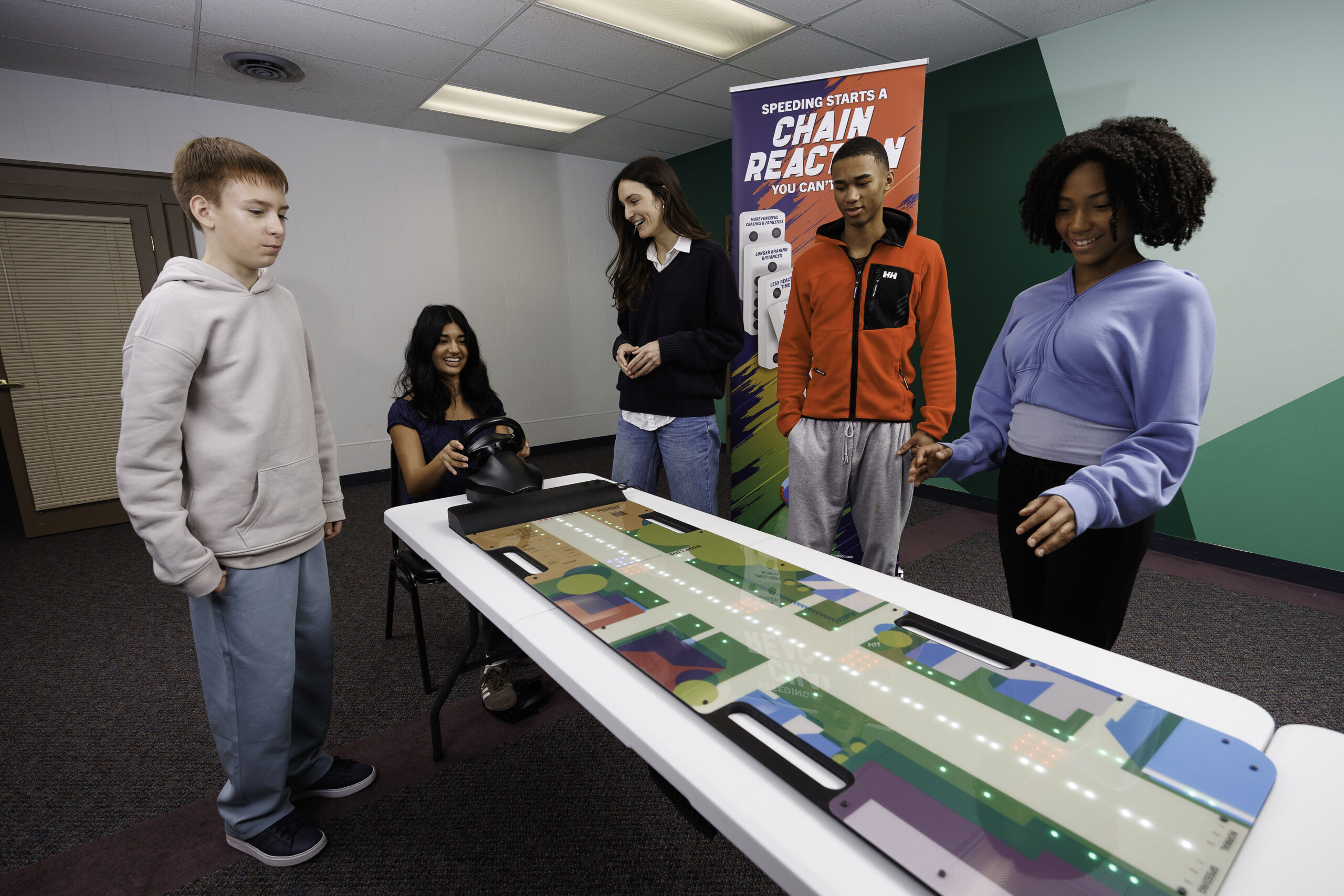
Engage participants with a hands-on simulation that shows drivers what speed costs them. Fatal Speeding® helps participants see and understand what happens when drivers push beyond safe limits. Using a steering wheel, pedals, and an electronic board, participants run the same driving task at normal and higher speeds, then see their own results from both displayed side by side.
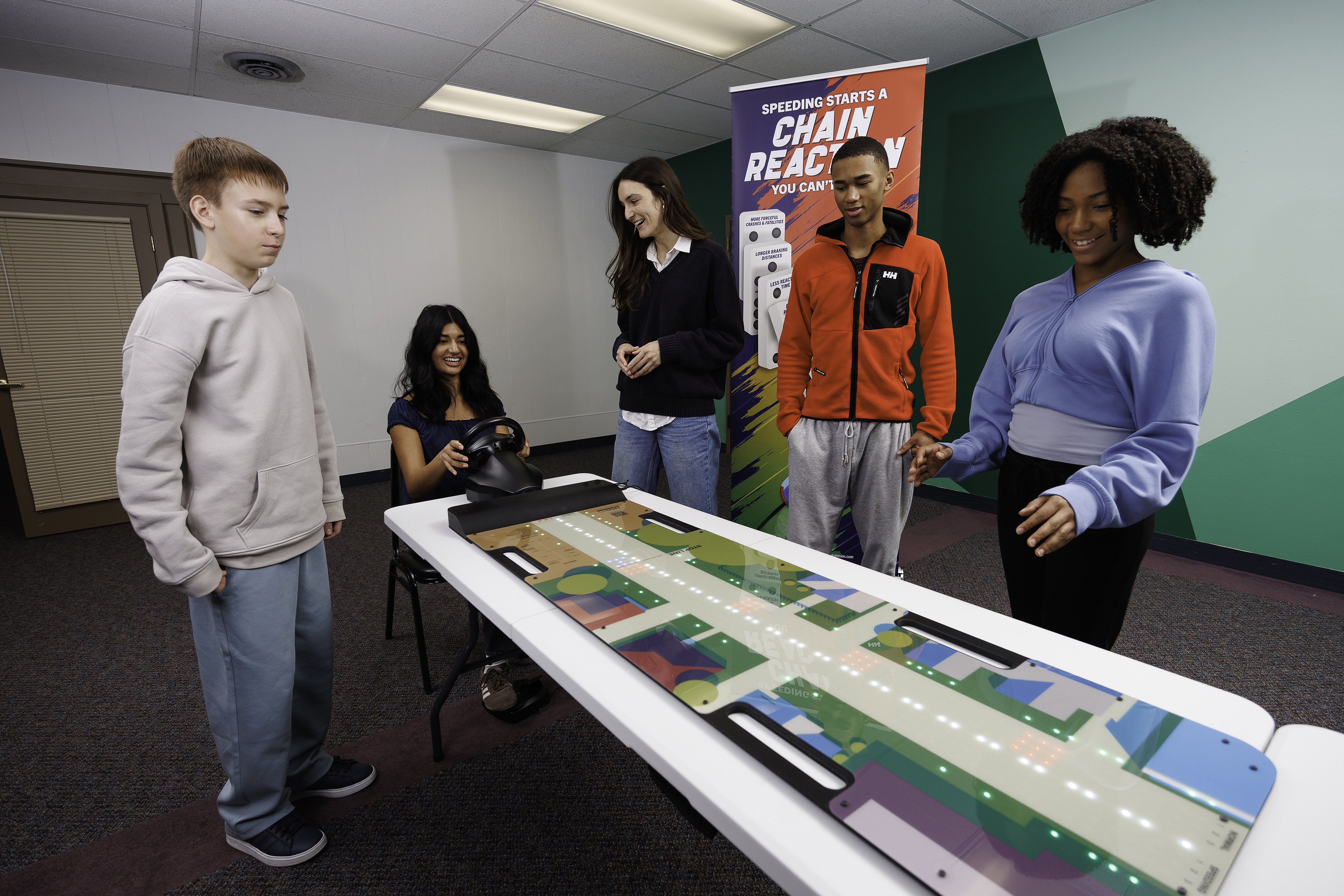
How Does It Work? Fatal Speeding compares how a driver performs at normal speeds versus higher speeds using a simulated driving task. Participants steer to avoid obstacles and brake to stop at a designated stopping line while the system tracks results on the LED board. After three normal-speed trials, the system automatically increases speed, reducing the time available to perceive hazards, react, and stop.
Three more trials follow at the higher speed. The board then displays both sets side by side. Each crash appears as a block, so the taller column under the higher speed is visible at a glance. Braking shows the same way: green lines where the driver stopped before the line, red lines extending past it. There are no numbers to interpret, which means the comparison reads clearly for any audience, from a driver education classroom to a crowd at a community event.
The experience naturally sparks conversation and reflection as participants talk through what they noticed, what changed at higher speeds, and how those differences affect real-world driving decisions.
Demonstrate the real dangers of speeding. Speeding isn’t just breaking the law; it affects a driver’s ability to react and stop in time to avoid hazards. For more than 20 years, speeding has been a factor in nearly one-third of all traffic deaths (NHTSA). Research on average traffic speeds finds that a 1% reduction in mean speed is associated with roughly a 2% reduction in injury crashes and a 4% reduction in fatal crashes.
Fatal Speeding turns those numbers into something personal. Participants see how higher speeds affect their own reaction time and stopping distance, and the side-by-side display lets them draw the conclusion themselves.
Simple Setup. Clear Results.
Ideal For:
Fatal Speeding® is built on a research-based approach connecting the physics of speed to the psychology of risk perception.
The Core Challenge: Speed Effects Are Hard to Recognize
Drivers cannot see their reaction time slowing, feel their stopping distance lengthening, or perceive how speed affects their ability to respond to hazards. Because these effects are difficult to recognize from behind the wheel, drivers may underestimate their own risk at higher speeds. Psychologists call this optimistic bias: the well-documented tendency to believe bad outcomes are more likely to happen to others than to oneself.
On the road, this is compounded by a second problem. Drivers rarely receive feedback on the choices they make. A driver who brakes late and stops safely learns nothing about how close the margin was, so the same decision gets repeated.
How Fatal Speeding Works
Rather than simply telling participants that speed affects driving performance, Fatal Speeding® shows them. The activity is grounded in established behavioral science:
The structured debrief is what turns the simulation into insight. Participants reflect on what changed at higher speeds and what those differences mean for real driving decisions, helping turn the hands-on experience into learning they can apply beyond the activity.
Three Years in Development
Innocorp invested three years developing Fatal Speeding® in collaboration with traffic safety experts and educators across the country, ensuring the activity accurately reflects the physics of speed and resonates with the populations prevention professionals serve.
Agencies interested in collecting outcome data alongside their Fatal Speeding® implementation are encouraged to contact us. We can support evaluation design and share what we learn across the field.
Built to Fit How You Already Teach
Fatal Speeding® creates something discussion alone cannot: a personal result. Participants do not hear that speed shortens reaction time, they watch their own braking and steering errors appear on the board. That firsthand recognition gives facilitators a shared reference point that discussion, materials, and any curriculum already in use can build on.
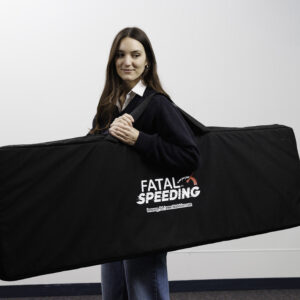
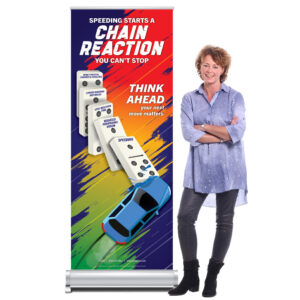
This Program Kit includes:
Product Care & Warranty:
Innocorp’s seasoned trainers collaborate with your team to unlock the full potential of Innocorp products within your awareness and prevention initiatives.
Training Objectives
Engage participants with a hands-on simulation that shows drivers what speed costs them. Fatal Speeding® helps participants see and understand what happens when drivers push beyond safe limits. Using a steering wheel, pedals, and an electronic board, participants run the same driving task at normal and higher speeds, then see their own results from both displayed side by side.
How Does It Work? Fatal Speeding compares how a driver performs at normal speeds versus higher speeds using a simulated driving task. Participants steer to avoid obstacles and brake to stop at a designated stopping line while the system tracks results on the LED board. After three normal-speed trials, the system automatically increases speed, reducing the time available to perceive hazards, react, and stop.
Three more trials follow at the higher speed. The board then displays both sets side by side. Each crash appears as a block, so the taller column under the higher speed is visible at a glance. Braking shows the same way: green lines where the driver stopped before the line, red lines extending past it. There are no numbers to interpret, which means the comparison reads clearly for any audience, from a driver education classroom to a crowd at a community event.
The experience naturally sparks conversation and reflection as participants talk through what they noticed, what changed at higher speeds, and how those differences affect real-world driving decisions.
Demonstrate the real dangers of speeding. Speeding isn’t just breaking the law; it affects a driver’s ability to react and stop in time to avoid hazards. For more than 20 years, speeding has been a factor in nearly one-third of all traffic deaths (NHTSA). Research on average traffic speeds finds that a 1% reduction in mean speed is associated with roughly a 2% reduction in injury crashes and a 4% reduction in fatal crashes.
Fatal Speeding turns those numbers into something personal. Participants see how higher speeds affect their own reaction time and stopping distance, and the side-by-side display lets them draw the conclusion themselves.
Simple Setup. Clear Results.
Ideal For:
Fatal Speeding® is built on a research-based approach connecting the physics of speed to the psychology of risk perception.
The Core Challenge: Speed Effects Are Hard to Recognize
Drivers cannot see their reaction time slowing, feel their stopping distance lengthening, or perceive how speed affects their ability to respond to hazards. Because these effects are difficult to recognize from behind the wheel, drivers may underestimate their own risk at higher speeds. Psychologists call this optimistic bias: the well-documented tendency to believe bad outcomes are more likely to happen to others than to oneself.
On the road, this is compounded by a second problem. Drivers rarely receive feedback on the choices they make. A driver who brakes late and stops safely learns nothing about how close the margin was, so the same decision gets repeated.
How Fatal Speeding Works
Rather than simply telling participants that speed affects driving performance, Fatal Speeding® shows them. The activity is grounded in established behavioral science:
The structured debrief is what turns the simulation into insight. Participants reflect on what changed at higher speeds and what those differences mean for real driving decisions, helping turn the hands-on experience into learning they can apply beyond the activity.
Three Years in Development
Innocorp invested three years developing Fatal Speeding® in collaboration with traffic safety experts and educators across the country, ensuring the activity accurately reflects the physics of speed and resonates with the populations prevention professionals serve.
Agencies interested in collecting outcome data alongside their Fatal Speeding® implementation are encouraged to contact us. We can support evaluation design and share what we learn across the field.
Built to Fit How You Already Teach
Fatal Speeding® creates something discussion alone cannot: a personal result. Participants do not hear that speed shortens reaction time, they watch their own braking and steering errors appear on the board. That firsthand recognition gives facilitators a shared reference point that discussion, materials, and any curriculum already in use can build on.
This Program Kit includes:
Product Care & Warranty:
Innocorp’s seasoned trainers collaborate with your team to unlock the full potential of Innocorp products within your awareness and prevention initiatives.
Training Objectives