Sum It Cup® and Fatal Vision® Impairment Goggles are the only hope of stopping a Zombie Outbreak. ORDER TODAY and help save the world! Charlie Daniels and Katie Daniels are in charge of a slew of Alaskan Zombies. They let the zombies loose on a group of University of Alaska-Anchorage students over a weekend in September. The results? The zombies inoculated students not against themselves but against ignorance about alcohol consumption.
As part of Communities Mobilizing for Change on Alcohol (CMCA), a division of the Volunteers of America-Alaska, Charlie Daniels focuses on outreach to young adults. Her main goal is to reduce underage drinking in Anchorage through outreach to three groups: 1) the high school-to-21-year-old age group; 2) this group’s “near-peers” (ages 21-28); and 3) adults who all-too-frequently enable young adults to obtain alcohol.
 She’s so concerned because 49 percent of Alaskan ninth-through twelfth-graders in Alternative High Schools report they’re currently drinking, and 37 percent report they’re binge-drinking. While considering what outreach was likely to attract students on the UA-Anchorage campus this September, Charlie happened upon the Humans vs. Zombies web site. Immediately, she decided to use this zombie version of tag in her September alcohol prevention event.
Past events included Drunken Super Mario and Drunken Carnival Games, both using the Fatal Vision® Goggles and both successful education outreaches.
“All your senses get dulled by alcohol,” says Katie Daniels, Charlie’s 24-year-old daughter and fellow CMCA staffer. “It isn’t only the vision that’s impaired.” She cites the example of games where students pass an object back and forth. The student wearing the Fatal Vision® Goggles wasn’t even aware that something was being passed to them.
The goal for the 2012 outreach was to equal or surpass that impact on students, and Humans vs. Zombies had the appeal to do just that. “We call it ‘edutainment,’ for the target population,” Charlie laughs. “They’re not going to come to a lecture.”
Charlie and Katie partnered with the UA-Anchorage, Monster Energy Drinks which supplied wristbands, and the Alaska National Guard Counterdrug Civil Operations (CCO) to host the Humans vs. Zombies games, two of which were scheduled on consecutive days over a weekend.
Each game started with one student in zombie costume as the original infected walking dead. At first, students found it easy to escape the zombie’s infectious touch, but gradually more and more students got infected and had to turn their bandanas identifying them as human to the zombie side. To escape the zombies, students threw sock balls at them to temporarily halt their infection and freeze the zombie for ten minutes. Or students escaped in small groups to The Lab, where they completed alcohol education challenges.
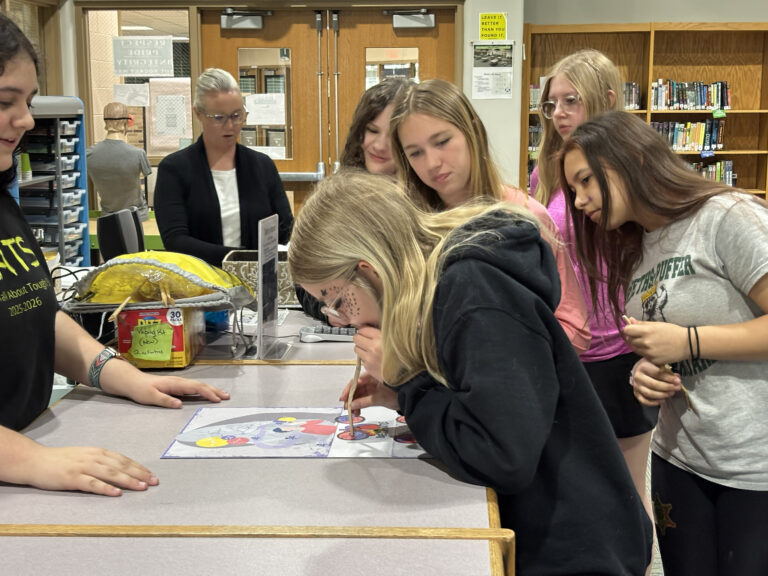
To escape the zombies, students could seek a safe haven at “The Lab” where they participated in Sum It Cup® and Fatal Vision® Goggle activities.
The challenges included having to identify how much alcohol was in a drink using the SUM-It-Cup®. These humans were surprised to learn that when they order a Long Island Iced Tea, for instance, they’re actually downing four servings of alcohol, not one. Enough to zombify them, for sure. “A lot of students were able to gauge it to real life,” says Katie.
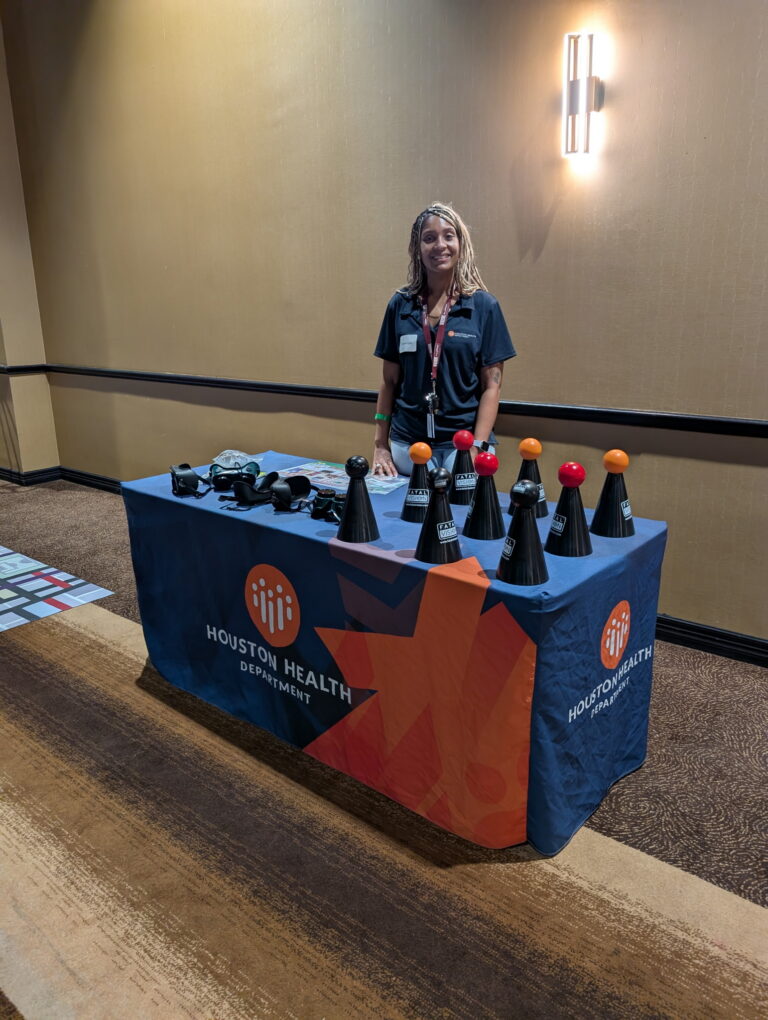
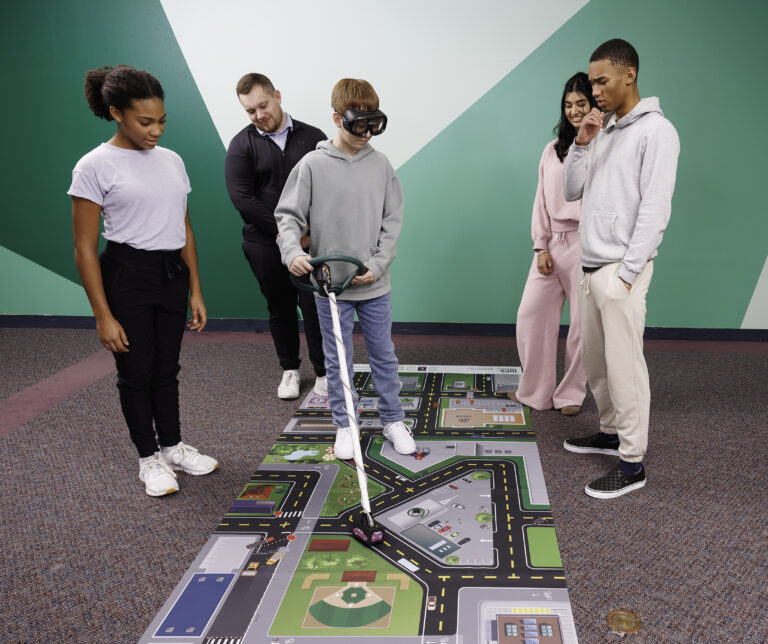
S tudents also wore Fatal Vision® Goggles and attempted to drive remote-control cars through an obstacle course. Volunteer Lab workers asked each participant to identify the “obstacles” as friends or family members to make it personal when the car they were driving plowed into one. The goggles were so popular that student volunteers vied to participate. Other challenges included Bowling with Body Parts in which students used a mannequin head or leg/arm to knock down pins and answered true-false questions about alcohol consumption.
“Students were horrified to learn that if you’re popped for DUI in Alaska, you can’t drive through Canada, you’ve got to fly home,” says Charlie, noting the same is true for military families who are the outreach objects of the CCO. “That can get expensive, especially for a family.”
Katie, who ran the games on-site, wanted to focus in particular on alcohol and Sexually Transmitted Diseases (STD) education. Students were informed that 60 percent of STDs are transmitted while under the influence of alcohol.
The games were followed up both days by a huge barbecue, well-attended by humans and zombies alike.
Were the Humans vs. Zombies games successful? The UA-Anchorage gave the event a thumbs-up, according to Katie.
And Charlie laughs again. “It’s cold in Alaska, but those kids ran into the creek to escape the zombies.”
So that would have to be a yes.