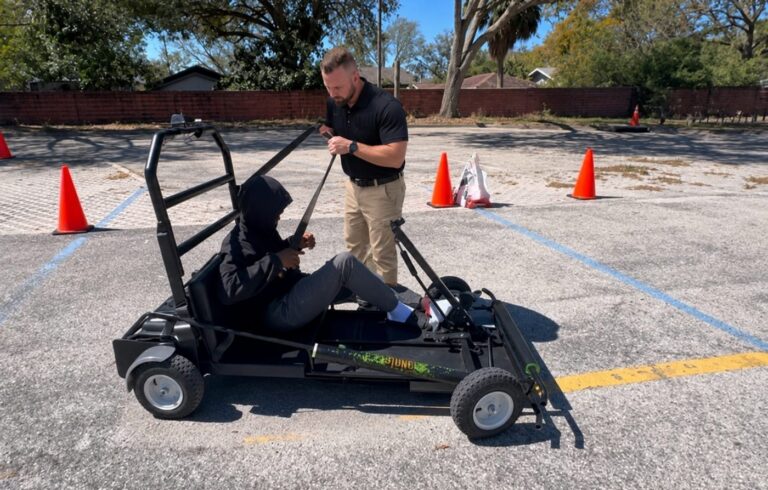
Fatal Vision® Products Aid Florida Police in Impaired Driving Prevention
Florida’s 2025 Officer of the Year uses Fatal Vision® Goggles and SIDNE® to make impaired driving prevention lessons real and hands on.

At a Glance
|
Prevention education is usually organized one substance at a time, an alcohol unit in the fall, a drug prevention unit in the spring. That structure can leave out the social settings where more than one substance is present, and combined impairment is a harder topic to teach from a slide.
In public health, polydrug use refers to more than one substance being present in a person’s system at the same time. The term covers a wide range of chemical combinations across clinical and illicit contexts, and the impairment effects vary substantially depending on which substances are involved.
This post focuses on one combination: alcohol and THC. As cannabis legalization has expanded across many states, it is the combination prevention coordinators most frequently ask us about, and it is the specific interaction our hands-on simulation tool is built to demonstrate. Other substance combinations carry their own risks and belong in a broad health curriculum, but they are outside what this particular activity simulates.
Individually, alcohol and THC each influence the central nervous system, affecting balance, motor coordination, reaction time, and divided attention. Used together, their combined impact is not a matter of simple addition.
Research summarized by the National Institute on Drug Abuse indicates that combining alcohol and cannabis can produce compounded impairment:
That variability is why self-assessment is an unreliable basis for deciding whether to drive. Personal judgment is an imprecise measure of impairment under any circumstances, and a second substance adds another variable to the estimate.
Educators face two recurring hurdles on this topic.
The first is the additive assumption. Audiences often expect that combining substances produces a predictable, linear increase in impairment, when the interaction between a depressant and a cannabinoid is less predictable than that.
The second is the subjectivity of self-assessment. Feeling alert is not the same as being unimpaired, and that distinction is difficult to convey through discussion alone.
Because an abstract explanation of chemical interaction can stay theoretical, an interactive demonstration gives educators a tangible way to illustrate how combined impairment affects physical performance.
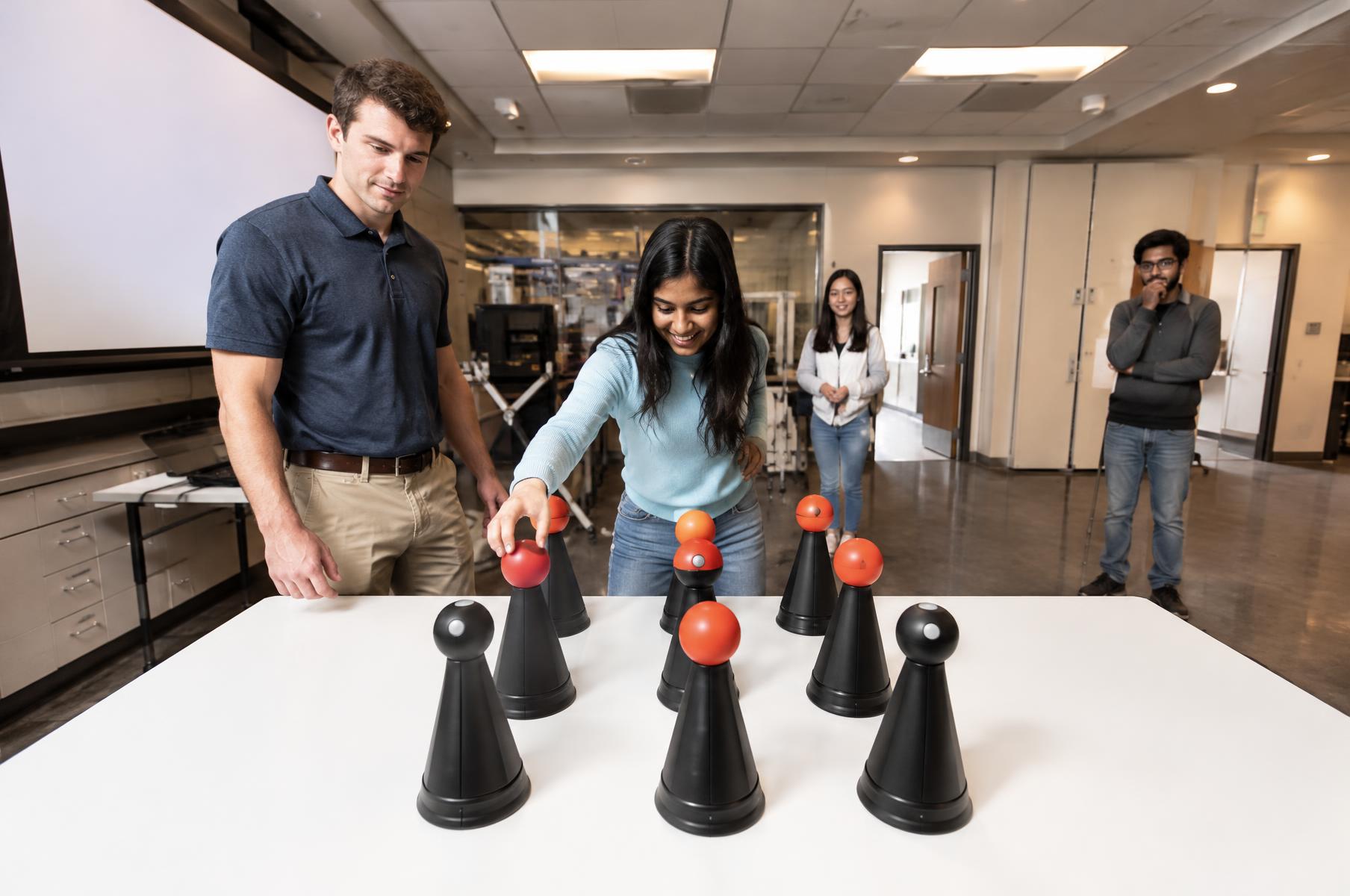
 Polydrug [Alcohol & THC] Goggle Kit includes several hands-on activities designed to help participants explore how combining alcohol and THC can affect coordination, perception, decision-making, and reaction time.
Want to talk through how this fits your curriculum? Request a quote and our team can help you match tools to your program.
Incorporating alcohol and THC education does not require rebuilding your curriculum. Most organizations add the topic to units already in place.
An objective, supportive tone matters on this topic. Framing the session around how impairment works, rather than around judgment, tends to keep the discussion open. Keeping local health and support resources available at the table lets anyone take one without asking.
No. The Fatal Vision® Polydrug [Alcohol & THC] Goggles are engineered specifically to simulate visual and coordination effects associated with concurrent alcohol and THC use. They do not simulate other drug combinations.
The goggles simulate visual distortion, altered depth perception, divided attention challenges, and slowed response time associated with combined alcohol and THC use. They are an educational simulation, not a measurement of an individual’s impairment.
Yes. A 10 to 15 minute demonstration using a simple coordination task and the three-step comparison sequence fits within a standard 45-minute health or driver education class, leaving time for a guided debrief.
The THC Goggles simulate effects associated with cannabis use on its own. The Polydrug [Alcohol & THC] Goggles simulate the combination of alcohol and THC together. Programs running the three-step comparison above use both.
Fatal Vision® tools are designed to enhance and reinforce the prevention programs educators, health professionals, and community organizations already run. They provide the hands-on, experiential learning component that supports the conversations educators are having every day.
For research, data, and educational literature on substance interactions, visit NIDA and SAMHSA.
Looking to add combined alcohol and THC impairment activities to your program? Explore the Polydrug [Alcohol & THC] Goggles, request a quote for your program, or reach out to our team with questions.
Innocorp is the pioneering developer of Fatal Vision® Goggles and other hands-on impairment-awareness tools used globally by law enforcement, educators, and safety professionals.
Florida’s 2025 Officer of the Year uses Fatal Vision® Goggles and SIDNE® to make impaired driving prevention lessons real and hands on.
How a Michigan School District Runs a Peer-Led Impaired Driving Program with Fatal Vision® Goggles At a Glance How a Michigan school district’s peer-led program trains high school students to

Walking Toward Prevention: A Hands-On Approach to Pedestrian Safety ⏱ Estimated reading time: 5 minutes At a Glance: Why Pedestrian Safety Education Matters Common Challenges for Young Pedestrians The Value