
Fatal Vision® Products Aid Florida Police in Impaired Driving Prevention
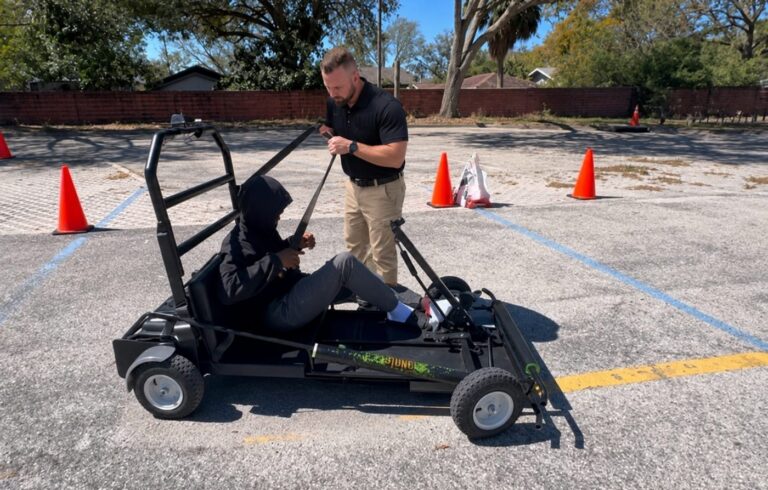
Florida’s 2025 Officer of the Year uses Fatal Vision® Goggles and SIDNE® to make impaired driving prevention lessons real and hands on.
Reading time: 6 minutes
|
At a Glance
|
Jump to a section:
Red Ribbon Week runs October 23 through 31, and the work schools put into it shows: ribbons, themed days, and a building full of students paying attention to drug misuse prevention activities. That attention is worth carrying forward. Coordinators who plan in September for what follows in November can use the same energy to keep the conversation going through the rest of the year.
Red Ribbon Week arrives with a theme, a date range, and an expectation that something visible will happen. For a prevention coordinator, that usually means filling five days with the week’s own activities, which the school community already recognizes and which take real work to organize.
None of that work is wasted. Visibility is the point of an awareness week, and a building that looks like it cares about prevention is communicating something to students. Hands-on activities can sit alongside that visibility: the ribbons and themed days show that the school takes the topic seriously, and a facilitated activity gives students something to experience and talk about.
A themed week creates energy on a schedule, and that energy is an asset. Students see their school take prevention seriously, staff and community partners get involved, and the topic becomes part of everyday conversation for several days. Many coordinators look for ways to bring some of that attention into the weeks that follow.
There is a practical upside to extending it, too. Programming that continues beyond October builds on what students have already seen, and the equipment a program already owns gets used more than once a year. A program that runs on a cycle is also easier to hand off when staffing changes, because the plan, the facilitators, and the materials are already in place.
The week is a strong start to the conversation, and the months that follow are a chance to continue it.
Drug misuse prevention activities that fit a themed week work best when they suit foot traffic as well as a class roster, because during Red Ribbon Week the audience arrives in whatever group the schedule produces. A few that hold up in that setting:
One facilitation note that applies to all of these: the activity opens the door to a discussion, and the debrief is where the content lives.
Not sure which setup suits your building and your foot traffic? Request a quote and our team can talk through the options.
The equipment that ran the October station works in every other month, and the calendar supplies its own reasons to use it:
Attaching the activity to something already scheduled keeps it sustainable. A session that fits a health period or advisory slot someone is already teaching needs no new space on the calendar.
Follow-through goes smoothest when it is on the calendar before October begins, while planning time is available. Four decisions worth settling in advance:
That last question is one every program benefits from answering early, because a written plan makes it easier for a program to continue through staffing changes. Training facilitators on the equipment helps, and Innocorp offers on-site train-the-trainer instruction as an additional service. Our overview of what Innocorp on-site training covers explains what that looks like.
Also known as drug abuse prevention activities, drug misuse prevention activities are instructional activities that give participants a hands-on way to engage with how substances affect coordination, reaction time, and judgment. In schools they are usually run as a station or a classroom session, where a participant attempts a simple task while wearing simulation goggles and the facilitator leads a discussion afterward.
Red Ribbon Week runs October 23 through 31. Many schools plan their programming in September, since equipment and facilitator time have to be arranged in advance.
Schools use a range of formats, and different formats suit different audiences and settings. A staffed station in a common area catches foot traffic across the week, and a full classroom session for one grade level gives that cohort more time for discussion. Some schools run both.
One option is to attach the next session to something already on the calendar, such as a health unit or advisory period, rather than creating a new slot. The weeks before Thanksgiving, the period before holiday break, and prom and graduation season are three points where the topic is immediately relevant to students.
Fatal Vision® tools are designed to enhance and reinforce the prevention programming schools and community organizations already run. They provide the hands-on component that supports the conversations educators are having, during an awareness week and in the months after it.
For community prevention planning, SAMHSA Communities Talk: Tips and Resources offers tips and resources for community prevention organizers.
Ready to build programming that runs past October? Explore our THC Goggles and the Vaping Dangers kits, request a quote for your program, or contact our team with questions about building a calendar. You can also browse our video library to see the activities in use, or visit our Funding & Grants page for resources to support an application.
Innocorp is the pioneering developer of Fatal Vision® Goggles and other hands-on impairment-awareness tools used globally by law enforcement, educators, and safety professionals.
Innocorp is the pioneering developer of Fatal Vision® Goggles and other hands-on impairment-awareness tools used globally by law enforcement, educators, and safety professionals.
We’d love to online chat! We are available Monday-Friday from 8am-5pm (CST):
Or schedule a time for a consultation:
Florida’s 2025 Officer of the Year uses Fatal Vision® Goggles and SIDNE® to make impaired driving prevention lessons real and hands on.

Reading time: 6 minutes At a Glance Why Thanksgiving, December gatherings, and New Year’s each bring their own outreach opportunities What polydrug use means, and why it comes up

Reading time: 6 minutes At a Glance Why the November clock change gives programs another timely reason to discuss drowsy driving What actually changes for drivers when the clocks